get in touch

Hello There!

Lorem ipsum dolor sit amet consectetur adipisicing elit. Animi natus quasi sunt eum ducimus.

Contact Info

  • Phone: 0123 456 789
  • Email: ecoly@info.com
  • Address: Graaf Floriss 22A CH NY

ZaoChar™ — Regenerating Africa, One Bag at a Time Let’s Talk

  • hello@carbonremovalafrica.com

  • Mon - Fri: 09am - 05pm

  • Ngata, Nakuru

tree OUR FAQ’S

Our Common Frequently Asked Questions
Contact us:

📬 Postal Address: P.O. Box 29939-00100, Nairobi, Kenya ✉️ Email: hello@carbonremovalafrica.com 🌐 Website: https://carbonremovalafrica.com

Our Location:

📍 Physical Address: Ngata, Nakuru, Nakuru County, Kenya

A: Biochar is a charcoal-like material produced by heating organic biomass in a low-oxygen environment through pyrolysis. At Biochar Carbon Removal Africa, we use a certified carbonizer operating at 400–700°C to convert agro-processing waste and sawdust into stable, high-grade biochar. Unlike regular charcoal, biochar is produced specifically for soil application and carbon sequestration.
A: We use 100% agro-processing waste and sawdust: rice husks from rice mills, maize cobs from cereal processors, coffee husks from wet mills, sugarcane bagasse from sugar factories, and sawdust and timber residues from sawmills and furniture workshops in the Nakuru region. No virgin biomass is used.
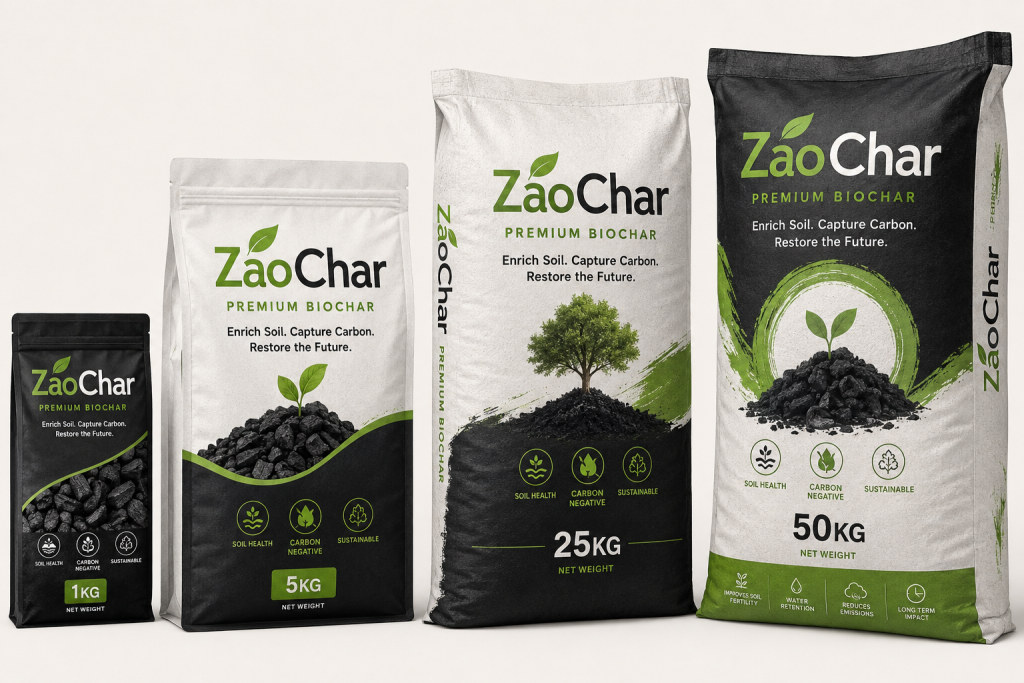
A: Recommended rates are 1–5 tonnes per hectare (20–100 bags of ZaoChar™ 50). For first-time applications on degraded soils, start with 2 t/ha and measure yield response. Biochar is a long-term investment — it does not need to be re-applied every season.
A: Yes. Biochar is chemically inert and non-toxic, safe for all crops and livestock. It is particularly effective on acidic, sandy, and highly weathered soils common across East and West Africa. ZaoChar™ 50 has a pH of 7.5–9.0, beneficial for acidic soils; a simple soil test is recommended before large-scale application to alkaline soils.
A: When biochar is applied to soil, the permanently sequestered carbon is certified by bodies like Puro.earth or Verra, generating one carbon credit per tonne of CO₂ removed. These credits trade at USD 100–300/tonne and are sold to corporations with net zero targets. This forms a major revenue stream alongside ZaoChar™ product sales.
A: We welcome equity investors, agri-dealers, carbon credit off-take buyers, NGO partners, and joint venture arrangements for new production regions. Contact us at hello@carbonremovalafrica.com or complete the enquiry form at carbonremovalafrica.com.
A: Water retention improvements are visible within the first growing season. Yield improvements typically become significant from the second season. Full long-term benefits — healthier soil biology, reduced fertiliser needs — compound over 3–5 years.
A: No. Biochar improves fertiliser efficiency by holding nutrients in the root zone. Many farmers reduce fertiliser input by 20–40% after three seasons while maintaining or improving yields.
A: Yes. Biochar increases soil water retention by 15–25%, extending effective growing seasons and buffering against the erratic rainfall patterns driven by climate change — critical for smallholder farmers in semi-arid regions.

Removing Carbon. Restoring Harvests. Regenerating Africa. ZaoChar™ — Regenerating Africa, one bag at a time

Sign Up to Our Newsletter

Subscribe to our Newsletter and Event right now to be updated

    Contact us:

    hello@carbonremovalafrica.com

    Our Location:

    Ngata, Nakuru

    Working Time:

    Mon - Fri: 9:00am - 5.00pm

    © 2026 CarbonRemovalAfrica. All Rights Reserved