get in touch

Hello There!
Lorem ipsum dolor sit amet consectetur adipisicing elit. Animi natus quasi sunt eum ducimus.
Contact Info
- Phone: 0123 456 789
- Email: ecoly@info.com
- Address: Graaf Floriss 22A CH NY
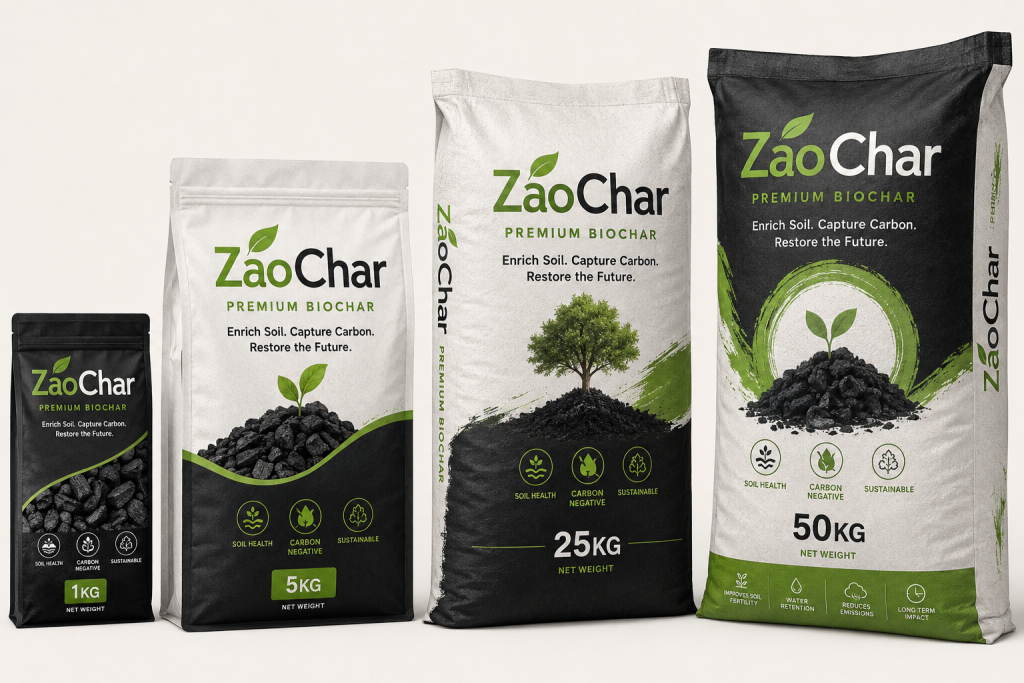
ZaoChar™ — Regenerating Africa, One Bag at a Time Let’s Talk
-
-
Mon - Fri: 09am - 05pm
-
Ngata, Nakuru

Call Us 24/7
+00 (47) 939 4888
 Africa’s Carbon Removal Pioneer

456 K+
Our design philosophy is more than aesthetics

97 %
Customers are served behind the digital marketing







Biochar Carbon Removal Africa Limited is a Kenyan climate-tech company headquartered in Nairobi with operations in Ngata, Nakuru. We transform agro-processing waste and sawdust — including rice husks, maize cobs, coffee husks, sugarcane bagasse, and timber mill sawdust — into high-quality biochar through certified carbonisation. Nothing goes to waste; everything cycles back.
We are driven by two interconnected principles: regenerative agriculture and agri-circularity. Regenerative because our biochar actively rebuilds soil health, biodiversity, and water cycles that intensive farming has depleted. Circular because every tonne of waste we collect from agro-processors and sawmills is returned to farmland as a life-giving soil amendment — closing the loop between waste and renewal.
Our mission is twofold: restore degraded African soils and permanently remove carbon dioxide from the atmosphere. By selling verified carbon credits alongside our biochar product, we create a dual revenue model that rewards partners financially while delivering measurable climate impact.
We are actively seeking strategic partners — investors, agri-dealers, NGOs, and impact funds — who share our vision of a regenerative, carbon-negative Africa.
ABOUT COMPANY


OUR SUCCESSFULL PROJECT

Residential Energy Solution
ENERGY, SOLAR


Solar Energy Solution
ENERGY, SOLAR

Solar Panel Solution
PANEL, SOLAR
 Our Feedstocks


Meet the Founders

Felix Asenji
CO-FOUNDER: A passionate advocate for African soil restoration, Felix brings deep roots in Kenya's agricultural sector and a vision for transforming agro-processing waste into regenerative value for smallholder farmers across the continent.

Wouter Moekotte
CO-FOUNDER Wouter brings international expertise in carbon markets, sustainable business models, and climate finance — connecting Biochar Carbon Removal Africa to the global net zero ecosystem and the impact investment community.

Steve Gikonyo
CO-FOUNDER Steve anchors the company’s operations and technical production, overseeing the certified carbonisation process and ensuring every batch of ZaoChar™ 50 meets the highest quality and traceability standards.

OUR TESTIMONIALS
They trust on us and our
exclusive solar service
“GREAT DESIGN SERVICES”
They are very easy to customization in every stage of funding and selling. It’s’ ability to oversee transactions. It’s customized our platform to meet internal requirements, and it’s now our singular solution.

William John
Marketing Director
“GREAT DESIGN SERVICES”
They are very easy to customization in every stage of funding and selling. It’s’ ability to oversee transactions. It’s customized our platform to meet internal requirements, and it’s now our singular solution.

Amelia Johnson
Developer
“GREAT DESIGN SERVICES”
They are very easy to customization in every stage of funding and selling. It’s’ ability to oversee transactions. It’s customized our platform to meet internal requirements, and it’s now our singular solution.

Amelia Johnson
Design Director
OUR SERVICES
Read our latest insights
from blog posts